Hi, fiction lover! Have you decided to take part in Novel November? 📖 Even if you’re not writing a novel currently, I have a treat for you today. I am going to be diving into subplots. This was an area of writing that I struggled with a lot. After all, how are we supposed to have a main plot and then balance a bunch of other threads? But I think I’ve connected the dots. Thanks to a video by Sarra Cannon, I can finally synthesize a post on how to write good subplots.
What is a Subplot? ✨

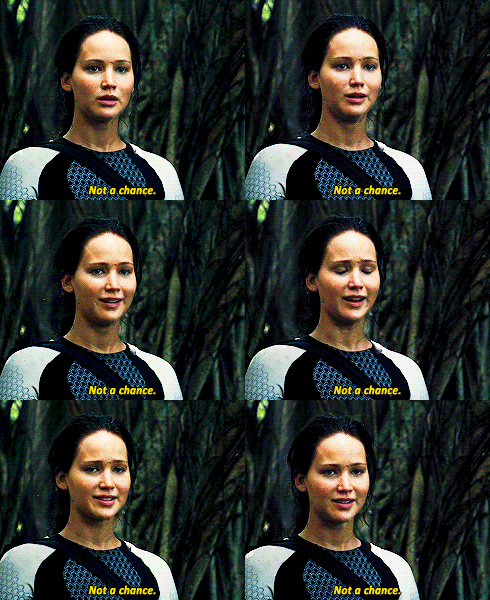
I highly recommend watching the video above! But basically, a subplot is an arc that is separate from the main plot. A subplot should not take away from the main storyline, but it should add to it, often offering a reflection or contrast of the main story. 🗺️ An example of a subplot is found in The Hunger Games, with the romantic subplot of Katniss and Peeta. The main plot in the book is whether Katniss will survive in the arena, but fans often gush over the romantic subplot the most.
Various genres can have various subplots associated with them. For a contemporary novel, there is often the romantic subplot. 💖 Other books have a mystery subplot. It’s important to read up on the genre in question, and to really hone in on what is being used by other authors!
A subplot will add tension—it’s not just meant to be a fun side story or distraction. It will also add some variety to the pacing, so the novel isn’t just a straight line. It enhances the theme of the story. For instance, it will point to the theme of good vs. evil or true love. It will never come out of left field just because!
How to Write Good Subplots
A good subplot starts with the main plot.
I know what you’re thinking! You want to get to the fun stuff. To craft a subplot that will be interesting in itself, like a distraction. 🪄
But a good subplot is not a distraction! It is always tied to the main storyline. For instance, we can go back to The Hunger Games. Katniss and Peeta have their romance, but this is key to the outcome of the games, because it’s tied to their survival and how they win over their sponsors in the Capitol.
I know how tempting it is to throw in something that’s funny and interesting. Maybe to explore the life of a side character. But if it isn’t related to the main plot, I would say it’s best to throw it out.
That’s not to say that you can’t explore side characters or interesting happenings in your story, but they all should tie back to the main premise.
So, figuring out the main premise is super important! I recommend writing out the query for your story, even if you aren’t sending it to a literary agent. Writing a query is a great way to focus on that main story question.
Some things to answer. What is your character’s ghost? 👻 (Thing in their past that haunts them.) What is their greatest desire? But what do they need? And how do they get what they need at the story’s end?
This will be different for every story, but you might find that you love to explore similar story questions! Perhaps there is a companionship element, or an element of overcoming trauma.
So, a subplot will tie into the ghost, desire, and need. It can be comedic, or it can be wild too, depending on the genre.
My Tips and Tricks
After finding out what subplot you want to write, I recommend figuring out how to weave it in. As Sarra Cannon reminded me, there should be sense to the layers. This means we shouldn’t be taking a break from the main story, spending five chapters exploring a subplot before going back to the main plot. This will surely confuse the reader! 💫
It also means that we shouldn’t introduce a subplot at the beginning of the book, forget about it, then bring it up in the end!
Both mistakes are jarring to the reader. The subplots should feel effortlessly woven into the main story, so the reader doesn’t see such a separation between each plot. In The Hunger Games, we see the plot and subplots as a whole—they all work together in tandem.
Have you figured out more about how to write good subplots? I love sharing writing advice and tips with you. I hope you learned something, whether you’re working on a novel or a shorter work. Follow me on my blog for more posts about fiction and fandom!
Leave a Reply